
Creating Your Birth Plan
Crafting a birth plan is an important step in preparing for labor and delivery, giving parents a voice in their birthing experience. A birth plan is a written document that outlines your preferences for labor, delivery, and postpartum care, allowing you to communicate your wishes clearly to your healthcare team. While it sets the stage for your ideal birth scenario, flexibility is key as labor can sometimes be unpredictable.

Why Parents Create Birth Plans
Expectant parents use birth plans to:
- Clarify Preferences: It helps convey your wishes regarding medical interventions, pain relief, and how you want your baby to be cared for immediately after birth. This can alleviate stress during the birthing process since decisions are already documented.
- Empower Your Voice: A birth plan can empower you by giving you the ability to make informed choices about your care and the care of your baby.
- Reduce Anxiety: Knowing that your preferences have been shared with your healthcare team can help reduce anxiety and allow you to focus on your baby’s arrival.
When to Start Making Your Birth Plan
It’s recommended to begin working on your birth plan in the third trimester, typically between 28 and 34 weeks of pregnancy. Starting at this time allows for ample discussions with your healthcare provider, giving them time to address any concerns or adjust the plan if necessary.
Who Should Receive Your Birth Plan?
Once completed, share your birth plan with key individuals involved in your labor and delivery:
- Healthcare Provider: Discuss your plan during prenatal appointments to ensure alignment with your doctor or midwife’s approach to care.
- Hospital or Birthing Center Staff: Bring multiple copies with you to the hospital or birthing center, ensuring that the nurses and staff are aware of your preferences.
- Your Birth Partner or Doula: Make sure your partner or doula is familiar with your plan so they can advocate for your wishes when you’re focused on labor.
Tip: Always make extra copies of your birth plan to distribute as needed, and consider keeping a digital copy for easy access.
Flexibility is Key
While your birth plan reflects your ideal scenario, it’s important to understand that childbirth can be unpredictable. There may be medical circumstances or other factors that require deviations from your plan. Maintaining flexibility ensures that your healthcare team can adapt to changing situations while still respecting your preferences where possible.
Key Considerations for Your Birth Plan
Here are some important aspects to think about when designing your birth plan:
- Pain Relief Preferences: Do you want to go for a natural birth without medications, or would you prefer an epidural or other pain relief options? If you’re open to medication, are there any types you want to avoid?
- Labor and Delivery Positions: Would you prefer the freedom to move during labor, walk around, or use a birthing ball? Do you have a specific position you want to deliver in, such as squatting, on all fours, or lying down?
- Medical Interventions: Are you comfortable with interventions like an episiotomy, vacuum extraction, or the use of forceps if necessary? Would you prefer minimal monitoring, or are you okay with continuous fetal monitoring?
- Placenta and Cord Clamping: Do you want delayed cord clamping to allow additional blood flow from the placenta to your baby? Do you have specific requests for how the placenta is handled, such as keeping it for encapsulation or another purpose?
- Immediate Post-Birth Bonding: Would you like skin-to-skin contact with your baby immediately after birth, or do you prefer that the baby be cleaned first? Do you want to delay the baby’s first bath, allowing more time for bonding?
- Post-Birth Care: Are you comfortable with immediate vaccinations and the administration of Vitamin K, or would you like to discuss delaying these procedures?
- Atmosphere in the Room: Do you want dim lighting, calming music, or a specific ambiance to help you feel relaxed during labor? Are you okay with photos and videos being taken during labor and delivery?
- Support System: Who do you want present in the room with you? This could include your partner, family members, or a doula. Will you allow visitors immediately after birth, or would you prefer some time alone with your baby?
- Feeding Preferences: Do you plan to breastfeed immediately after birth, or are you considering formula feeding?
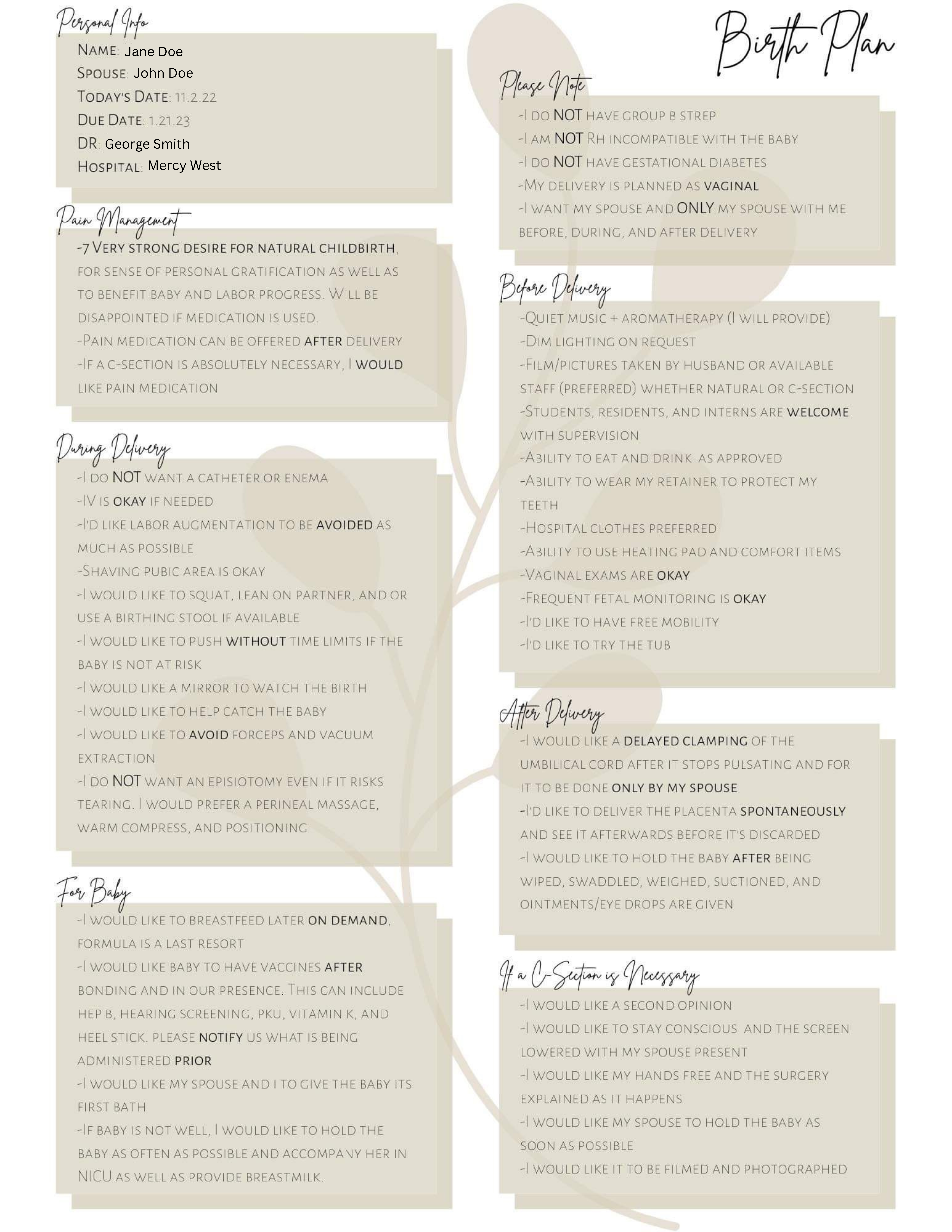
Example Birth Plan
Posting Your Birth Plan
To make sure your preferences are easily accessible, many parents choose to post their birth plan in their hospital or birthing center room. This way, even if the medical staff changes during shift rotations, everyone will have a clear understanding of your wishes.
Final Thoughts
A birth plan helps create a smooth and positive birthing experience by ensuring that your needs and preferences are known. Remember that flexibility is essential, as labor and delivery can bring unexpected changes. By preparing ahead, communicating with your healthcare provider, and keeping an open mind, you can feel more confident and empowered as you welcome your baby into the world.

Red Dye 40 in Foods: Does It Really Matter?
If you’ve ever flipped over a snack bag like Doritos and noticed “Red 40” on…

Having a Baby With Colic: When Nothing Seems to Help
If you’ve ever had a baby with colic, you know it’s not just “a fussy…

Should You Sleep In or Stick to Your Routine After a Rough Night?
When your baby or toddler has you up all night, the morning decision can feel…

Motherhood Burnout Isn’t a Failure — It’s a Signal
Motherhood burnout doesn’t usually arrive all at once. It creeps in quietly, between the never-ending…